
Full spectrum vs custom spectrum

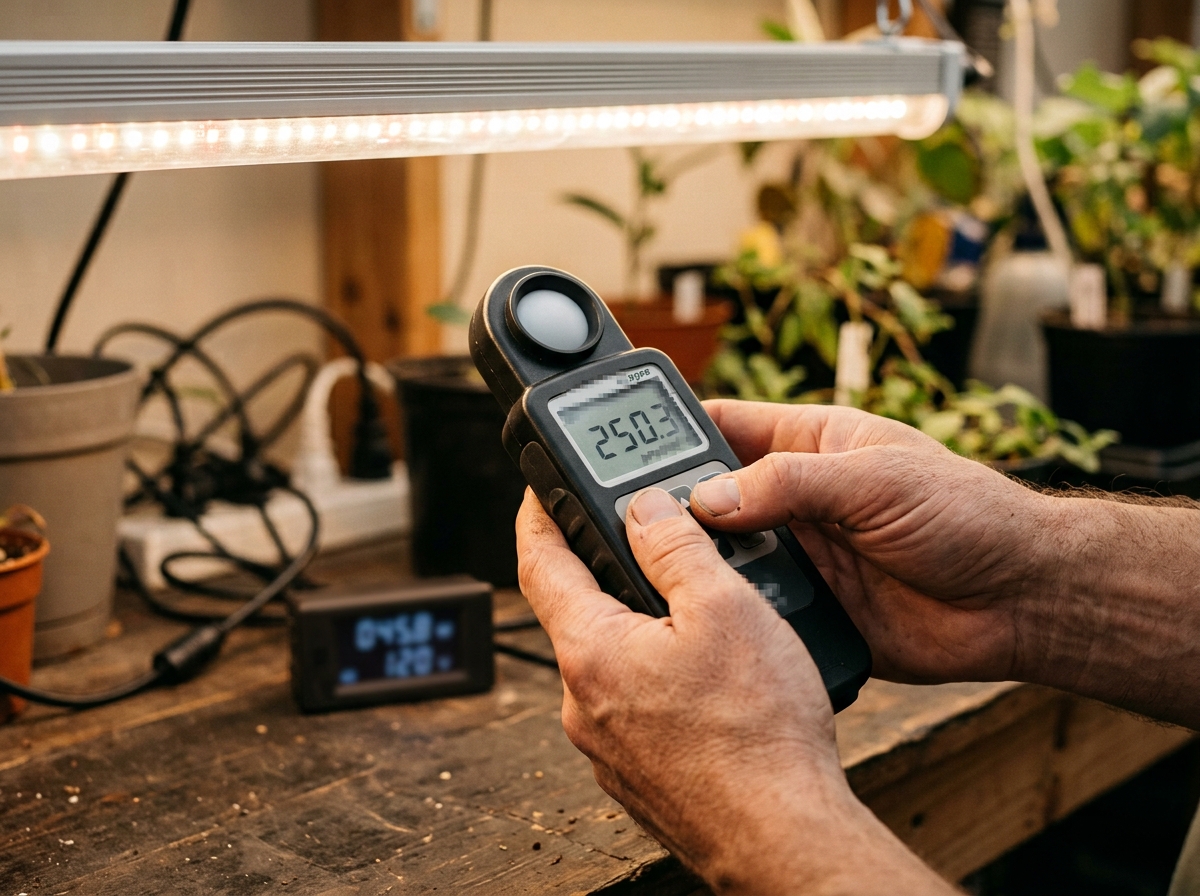
Full spectrum vs custom spectrum: which one to choose
White full spectrum or LED with configurable red/blue ratio? It depends on the crop. Here’s how to choose without getting it wrong.
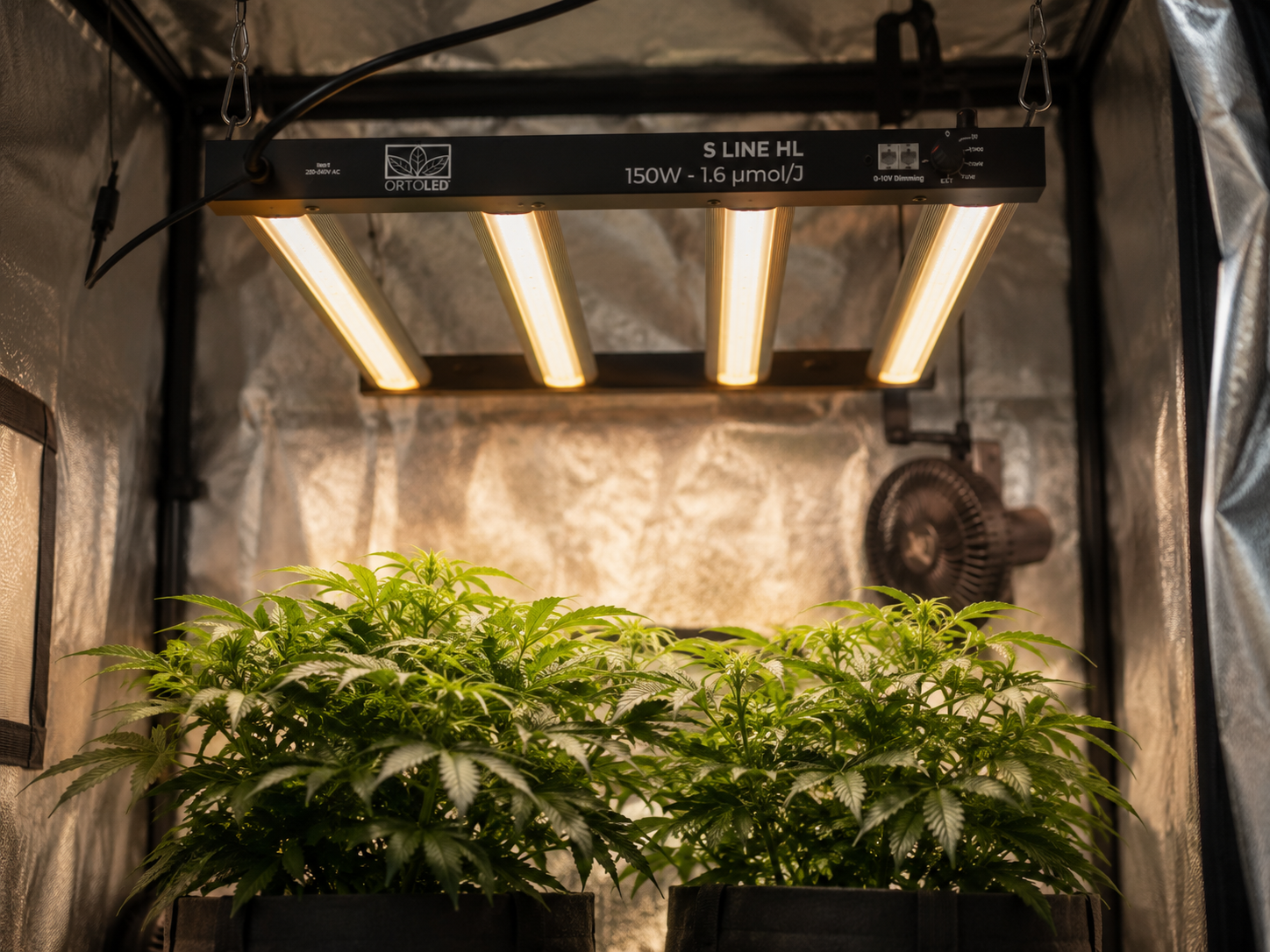
Every now and then a grower asks me whether white full spectrum is just a marketing choice or actually makes a difference compared to the old red and blue panels. The short answer is that it depends on what you’re growing and how much you want to simplify your life.
The light spectrum isn’t a cosmetic detail. Every wavelength triggers different physiological responses in the plant, and understanding which ones you need at each stage lets you choose the right lamp instead of the most heavily advertised one.
Let’s look at what changes between full spectrum and targeted red/blue spectrum, and when one makes more sense than the other.
What full spectrum means
A full spectrum LED reproduces the entire range of photosynthetically active light, between 400 and 700 nanometers, closely matching the natural spectrum of the sun. It includes blue, green, yellow, orange and red in a single balanced emission, like in the ORTOLED ECO Full Spectrum range.
The main advantage is versatility: the same lamp covers both vegetative and flowering well, without needing to change fixture or manually adjust channels.
Blue and red: the role of each wavelength
Blue light, between 400 and 500 nanometers, builds compact, sturdy plants. It stimulates lateral branching and keeps internodes short, an effect that’s highly sought after during the vegetative stage.
Red light, between 600 and 700 nanometers, triggers flowering hormones and supports the development of flowers and fruit. Too much blue at this stage can even push the plant toward unwanted vegetative behavior.
Vegetative and flowering: when the need changes
During vegetative growth, a balanced spectrum with a slight prevalence of blue works best, with a color temperature indicatively between 4000K and 5500K, to favor leaves and compact structure.
During flowering, the spectrum needs to become richer in red, with a color temperature between 3000K and 4000K, and a red-to-blue ratio that many growers set between 2:1 and 3:1 to maximize the floral response.
| Vegetative — color temperature | 4000–5500K |
| Flowering — color temperature | 3000–4000K |
| Flowering — recommended red:blue ratio | 2:1 – 3:1 |
Indicative ranges for most high light-demand indoor crops
Full spectrum or targeted red/blue: which one wins
Studies on crops such as lettuce show denser, more vibrant leaves with full spectrum light compared to red/blue panels alone, partly thanks to the green component, which improves light penetration into the lower canopy.
Targeted red/blue panels remain energy-efficient and useful as targeted supplementation, but on their own they don’t cover all the wavelengths needed for the plant’s overall health over the long term.
Full spectrum in one sentence
Full spectrum reproduces the entire 400-700nm range of sunlight in a single lamp, suitable for both vegetative and flowering without needing to change fixture. Targeted red/blue spectrum is more efficient for a single stage but requires more attention and often more lamps to cover the entire cycle.
For most indoor growers, full spectrum remains the simplest and safest choice: one lamp, the whole cycle, without having to guess the perfect ratio every time you change stage.
Still have doubts about spectrum?
Do I need to change lamp between vegetative and flowering?
Does too much blue during flowering really cause harm?
Does the green light in the spectrum actually serve a purpose?
How do I know if a lamp is truly full spectrum?
PPFD and DLI: the two values that determine your harvest
Without understanding PPFD and DLI you’re growing blind. A complete guide with practical examples.
µmol/J explained simply: how to choose an efficient LED lamp
Photon efficiency is the most important parameter when choosing a lamp. A complete guide with real data.
How far should LED lamps be from your plants?
Distance affects PPFD, leaf temperature and light uniformity. Here are the practical rules.
Ready to switch to
professional LED?
Discover the ORTOLED range — lamps with Samsung chips tested for yield, efficiency and durability.


